
Prioritization Methods That Work When Everything Feels Urgent
Three proven frameworks for deciding what actually matters. We’ll walk you through the Eisenhower Matrix, weighted scoring, and a hybrid method that works best for knowledge workers in Hong Kong.
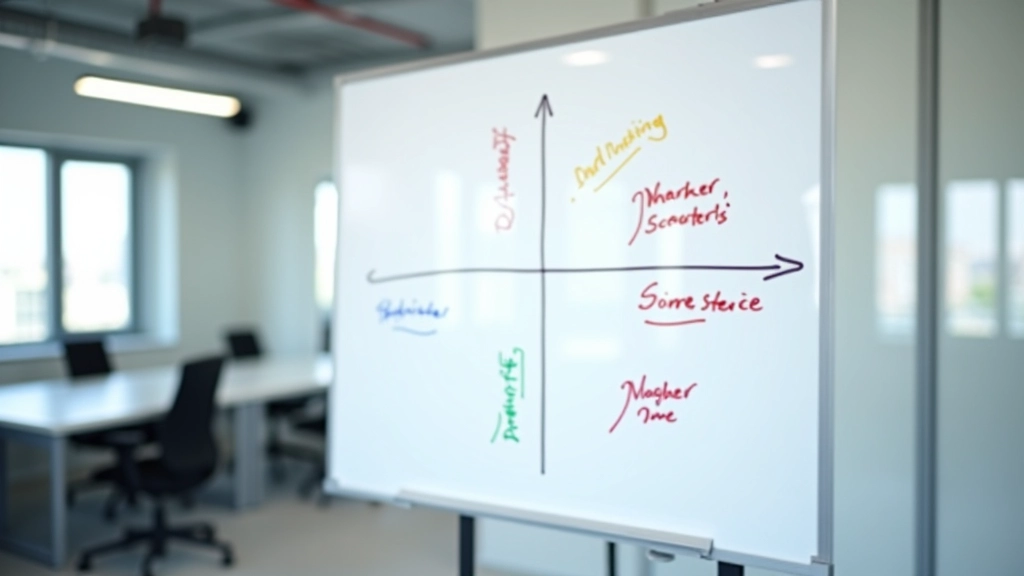

When Everything Feels Urgent
You’re sitting at your desk at 3 PM. Your inbox has 47 messages. Your manager just flagged three “urgent” items. A client needs something by 5 PM. Your team’s asking for feedback. And you haven’t started the project that’s actually due tomorrow.
Sound familiar? This isn’t a personal failing. It’s what happens when we don’t have a clear way to separate actual emergencies from what just feels urgent. The problem isn’t that you’re bad at managing time — it’s that you’re trying to prioritize without a system.
We’re going to change that. Here are three frameworks that actually work when everything’s screaming for your attention.

Framework 1: The Eisenhower Matrix
Dwight Eisenhower faced a problem you’re facing right now. He had to decide which military decisions needed immediate action and which could wait. His solution: a simple 22 grid.
Urgent & Important
Crisis calls. Real deadlines. Emergency meetings. Do these now.
Not Urgent & Important
Strategic projects. Skill development. Relationship building. Schedule these.
Urgent & Not Important
Most emails. Pop-in requests. Delegate or decline.
Neither Urgent Nor Important
Busywork. Doom scrolling. Time wasters. Eliminate.
Here’s why this works: Most interruptions feel urgent but aren’t important. Your boss’s email isn’t actually an emergency. That Slack message can wait 30 minutes. Once you see them in the bottom-right corner, you stop treating them like priorities.
The real magic happens in the top-right quadrant. That’s where your career actually gets built. But we skip it because nothing’s screaming about it. Block this time. Protect it fiercely.

Educational Context
These frameworks are designed for educational understanding of productivity principles. Individual circumstances vary widely — what works for a project manager might need adjustment for a designer or teacher. We recommend testing these methods with your own workflow and adapting them as needed. If you’re managing multiple complex projects, working with a productivity coach can provide personalized guidance.
Framework 2: Weighted Scoring
Sometimes the Eisenhower Matrix isn’t specific enough. You’ve got 8 things in the “important” box. Which one actually comes first?
Weighted scoring forces you to be honest about what matters. You assign points to different criteria, then multiply.
Example: You’ve got three projects competing for this week.
| Project | Impact (3) | Deadline (2) | Dependencies (1) | Total |
|---|---|---|---|---|
| Client presentation | 9 (27) | 10 (20) | 7 (7) | 54 |
| Process improvement | 6 (18) | 4 (8) | 8 (8) | 34 |
| Team training | 7 (21) | 3 (6) | 6 (6) | 33 |
Suddenly the decision’s clear. The client presentation wins. Not because it’s noisiest, but because it scores highest against what actually matters to you.

Framework 3: The Hybrid Method for Knowledge Workers
Neither framework works perfectly alone. The Eisenhower Matrix can be too simple. Weighted scoring takes too long. So here’s what works in actual offices here in Hong Kong.
Quick Filter (2 minutes)
Every new task gets sorted: Urgent+Important, Just Important, or Can Wait. This kills 40% of your daily interruptions immediately.
Daily Review (10 minutes)
Each morning, look at today’s “Urgent+Important” pile. If there’s more than 3 items, something’s mislabeled. Re-sort ruthlessly.
Weekly Scoring (30 minutes)
Friday afternoon, score next week’s “Just Important” items. This becomes your strategic roadmap instead of reactive firefighting.
The hybrid approach works because it’s light enough to actually use. You’re not spending 2 hours a week in planning. But you’re also not just reacting to whoever yells loudest.

Making It Stick
Here’s what most people miss: The framework doesn’t matter as much as actually using it. You could pick any of these three. What matters is consistency.
Pick one. Use it for 2 weeks. You’ll notice something shifts. People stop interrupting as much because you’re visibly more focused. Your stress drops because you’re not pretending everything’s equally urgent. Your actual important work gets done.
That’s not productivity. That’s clarity. And clarity changes everything.
Ready to Explore More?
Prioritization is just one piece. Time blocking, habit formation, and digital boundaries all work together.
Browse More GuidesContinue Learning